

Send Message
Privacy statement: Your privacy is very important to Us. Our company promises not to disclose your personal information to any external company with out your explicit permission.

 Product Categories
In electronic connectors, every design detail serves a purpose. While pin headers are commonly recognized for their metal terminals and reliable electrical connections, some configurations include empty positions without metal contacts. Known as blank pins or empty pin positions, these structures play an important role in hardware standardization, connection safety, and product flexibility.
Rather than being unnecessary spaces, blank pin positions in a pin header connector can support multiple engineering objectives, from preventing incorrect insertion to simplifying manufacturing and preparing products for future upgrades.
One of the most common applications of blank pins is mechanical polarization, which helps prevent reverse or incorrect insertion.
In a multi-position Pin Header, one or two positions may be intentionally left without metal terminals. The corresponding positions in the mating header connector can be blocked or keyed with plastic features.
When users attempt to insert the Connector in the wrong direction, the plastic structure prevents the metal contacts from engaging incorrectly. This helps reduce the risk of short circuits, damaged circuit boards, and wiring errors.
This low-cost protection method is widely used in industrial control equipment, programming interfaces, and debugging connectors such as JTAG.
Blank pin positions also support standardized product design and hardware compatibility.
Manufacturers can use a shared mold for a multi-position pin header connector across different products. For example, a 10-position header may include six active contacts and four reserved positions, allowing different product versions to share the same housing design.
Reserved positions can also provide room for future functional upgrades. As a device evolves, additional terminals may be added to previously unused positions to support new power supplies, communication channels, or sensor signals without completely redesigning the connector structure.
In certain applications, blank positions can help optimize electrical performance by creating additional separation between signal and power contacts.
Placing empty positions between high-speed signal lines or high-power terminals may increase spacing and help reduce potential crosstalk. In some connector designs, these spaces can also support electrical isolation and improve creepage distance requirements.
Depending on the overall circuit architecture, blank positions may contribute to separating strong and weak current paths, supporting electromagnetic compatibility (EMC) and reducing interference.
However, the actual electrical benefits depend on the circuit design, signal frequency, and connector structure.
Beyond electrical functions, blank positions can contribute to mechanical performance.
In double-row or multi-row header connector assemblies, strategically positioned empty spaces may help distribute insertion and extraction forces more evenly. This can reduce stress on the plastic housing and minimize the risk of terminal deformation during repeated mating cycles.
Certain connector designs also use empty positions as visual or structural references, helping operators identify the correct orientation during assembly. In applications with larger pin spacing, additional plastic material around unused positions may further support housing strength and alignment.
Blank pin positions can also improve production efficiency and product standardization.
A manufacturer may use the same header connector housing for standard and advanced product versions, changing only the number of installed metal terminals. This approach can help maintain consistent PCB layouts, reduce tooling requirements, and simplify inventory management.
In automated production and inspection processes, reserved positions may also serve as product identification references, helping testing equipment distinguish between different connector configurations and reducing sorting errors.
Blank pins are not simply unused spaces inside a pin header. They can serve as an effective engineering solution for improving connection safety, supporting product compatibility, optimizing electrical performance, and simplifying manufacturing.
Nevertheless, blank positions should be planned according to actual application requirements. In high-frequency and high-speed circuits, excessive empty spaces may introduce parasitic capacitance or affect signal integrity. Engineers should therefore carefully consider the number and placement of blank pins when designing a pin header connector.
By combining standardized structures with thoughtful terminal planning, manufacturers can develop header connector solutions that balance cost efficiency, mechanical reliability, electrical performance, and future product flexibility.
Whether you need standard pin headers, customized terminal configurations, or connector solutions with reserved blank positions, our team can help you identify the right option for your project.

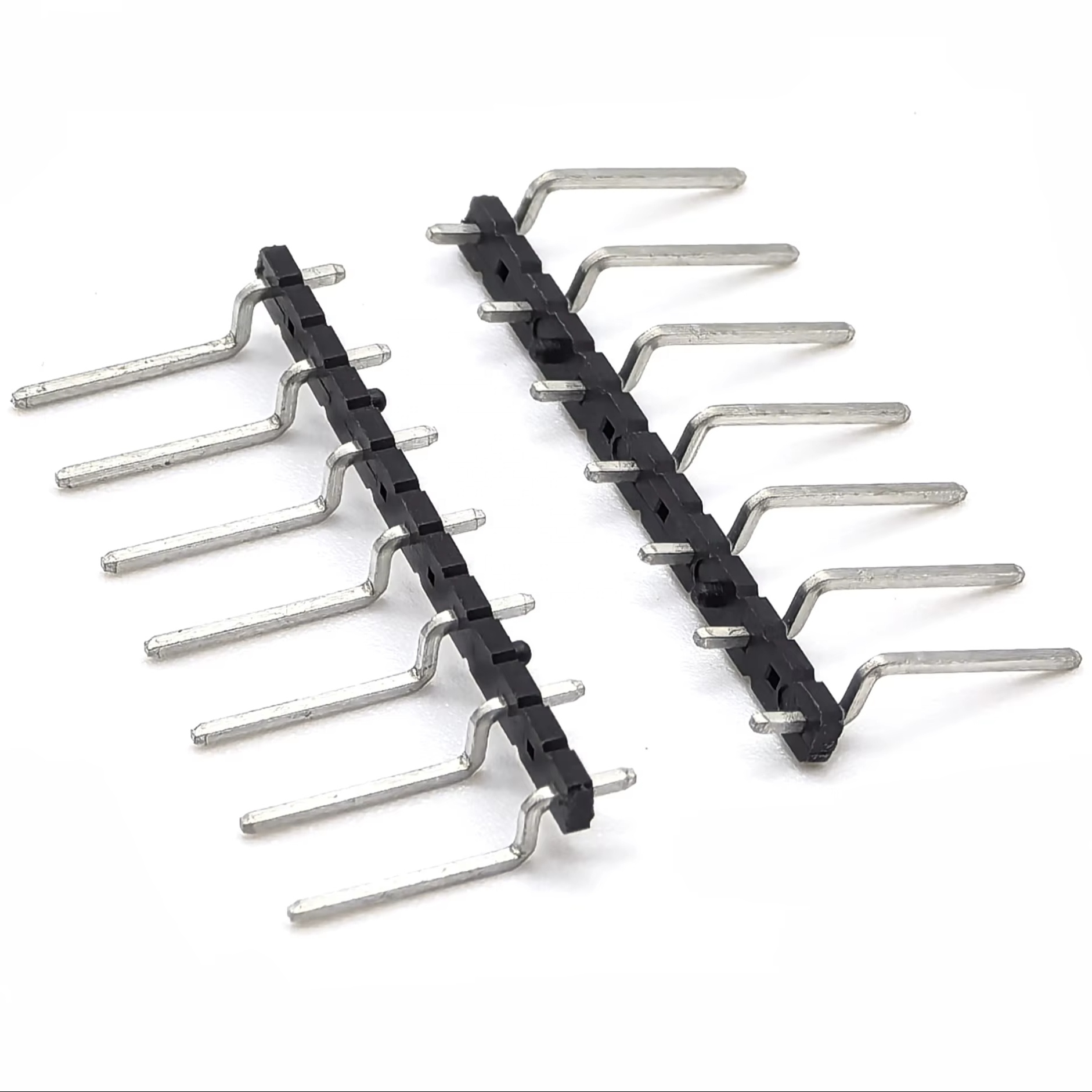
Contact us today for product specifications, technical support, and customized header connector solutions.
Email: julice@szyztech.com.cn
WhatsApp: +86 13631508961
Let’s create reliable and flexible connection solutions for your next electronic project!


Tel: 13631508961
Whatsapp: +86 13631508961
Address: Room 601, Building 6, Jiayi Industrial Park, Guixiang Community, Guanlan Street, Longhua District, Shenzhen City, Longhua District, Shenzhen, Guangdong China
Website: https://www.szyzconn.com
Privacy statement: Your privacy is very important to Us. Our company promises not to disclose your personal information to any external company with out your explicit permission.
Fill in more information so that we can get in touch with you faster
Privacy statement: Your privacy is very important to Us. Our company promises not to disclose your personal information to any external company with out your explicit permission.